
ODT Wednesday, 3 June 2026
Limiting voting rights ‘slap in the face’ for iwi – Ellison
By Ruby Shaw and Matthew Littlewood full story subscribed only.
https://www.odt.co.nz/news/dunedin/dcc/limiting-voting-rights-slap-face-iwi
Regional council chairwoman Hillary Calvert said, in her view, the proposal ‘‘supports democratic principles that people who have not been elected by the people should not be able to vote’’.
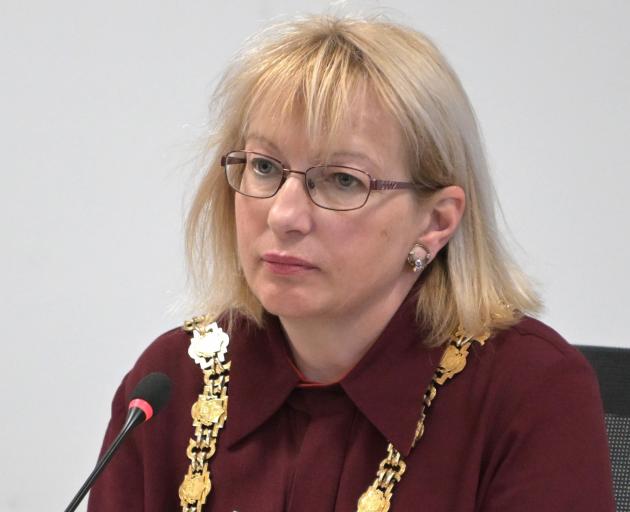
Sophie Barker. PHOTO: GERARD O’BRIEN
However, Dunedin Mayor Sophie Barker said she believed the announcement went ‘‘against three principles of the spirit of the Treaty of Waitangi… partnership, protection and participation.
‘‘I treasure our relationships and partnerships with mana whenua and am gobsmacked at this announcement.’’
The government had not consulted councils on the change, which would affect the Dunedin City Council’s model for working with mana whenua.
This included the mana-to-mana committee Te Pae Māori and roles on the Finance and Performance and Policy and Planning committees.
‘‘These committee roles make valuable contributions to our work with our runaka partners, and makes a place to share their voice at our council table and work on projects together,’’ Ms Barker said.
She said the announcement would also affect other council groups with external representatives, including the Audit, Risk and Assurance Committee, which has an external chair and deputy chair, grants subcommittee and probably the council’s Heritage Fund.
Cr Lee Vandervis said he had always opposed unelected voting rights.”
My comment to ODT was “Giving voting rights on Council Committees to members of elites who have not been voted to represent the public at large has been an expensive mistake for most people in my experience.
I have been one of the few Councillors to always vote against unelected voting rights and against race-based funding.”
I was surprised to learn recently that Maori unelected elite members were being paid $750 each per DCC Committee meeting till it came to Council where I argued strongly to get it down to $500 per meeting – still too much in my view, but the real costs are in diverting public funds to low priority projects like the $24 million cycleway extension past Portobello to the Marae.
It is often said that it is about ‘The People the people, the people’, when in my long experience it has been about ‘the money, the money, the money’.


