
Exporting our waste seems wrong until you consider that most of our waste is imported in the first place, and that regional boundaries don’t recognise ideal waste disposal areas.
About 80% of Dunedin waste, mostly commercial is appropriately disposed of in local landfills like Nash and Ross at Burnside with only the putrescent household waste having to go to near-full DCC Green Island Landfill.
The ideal landfill geology for problematic household waste is a limestone quarry like AB Lime in Winton or the new limestone pit just south of Timaru. Sending our putrescent waste there makes economic sense since these facilities make money both selling limestone creating the easiest complying hole, and then charging for filling the hole with putrescent waste.
These limestone-quarry facilities have already invested all the hundreds of millions needed to have some 200 years of landfill capacity available. Why not use this existing capacity and save ourselves the $94 million estimated for Smooth Hill, an up-front cost which may well escalate.
The argument for spending $94 million on a new better Green Island facility at Smooth Hill could make sense if you assume that:
1 – there will be sufficient waste quantity for the next 20 years to justify the massive up-front investment,
2 – that interest rates will not go higher than 5%,
3 – that the DCC can afford the interest and opportunity costs of burying $94 million in Smooth Hill,
4 – that Smooth Hill will be run efficiently for at least 20 years,
5 – that there will be no leakage or other environmental issues, and
6 – that AB Lime or Taiko won’t set up their own competing waste collection points in Dunedin and undercut DCC’s Smooth Hill operation.
If any of these assumptions is in doubt, and most are, then Smooth Hill looks to be an avoidable $94 million financial liability at a time when our Billion$ debt is already unsustainable.
There is no plan to pay DCC or DCC Company debt down over the next 9 years, we still haven’t paid down the DCC $85 million Stadium debt after 14 years, and doing it on debt is the current spendthrift Council’s way of disguising real rates increases.
Like the emotional argument of not ‘exporting’ our waste, the emotional argument that we need to ‘have control’ of our waste is an illusion as well. My 18 year Councillor experience of DCC ‘control’ of the DCC Landfill has not been pretty. Green Island management has been out of control for some years, gas collection has been incompetent and out for control for other years, staff claims of the complete fullness of Green Island have been wrong repeatedly, and post landfill closure liabilities have also been misrepresented.
Household waste disposal is constrained by increasingly difficult central government compliance and environmental legislation that is best anticipated by centralising reduced disposal volumes in the ideal geology of a limestone quarry.
DCC Waste Minimisation policy is a direct threat to the viability of a Smooth Hill household waste facility which can only be viable with sufficient volume – volume which the DCC is aiming to significantly reduce.
Convenient as green-waste bins are for some, the DCC should be reducing green-waste streams by actively supporting composting at home, mulching rather than green-waste removal, and permitting on-site spreading of woodchip.
Having acquired the necessary consents for a Smooth Hill Landfill, some strategic dragging of the chain and seeing how waste stream volumes reduce and how Green Island fills for two years would be my cost-effective preference.
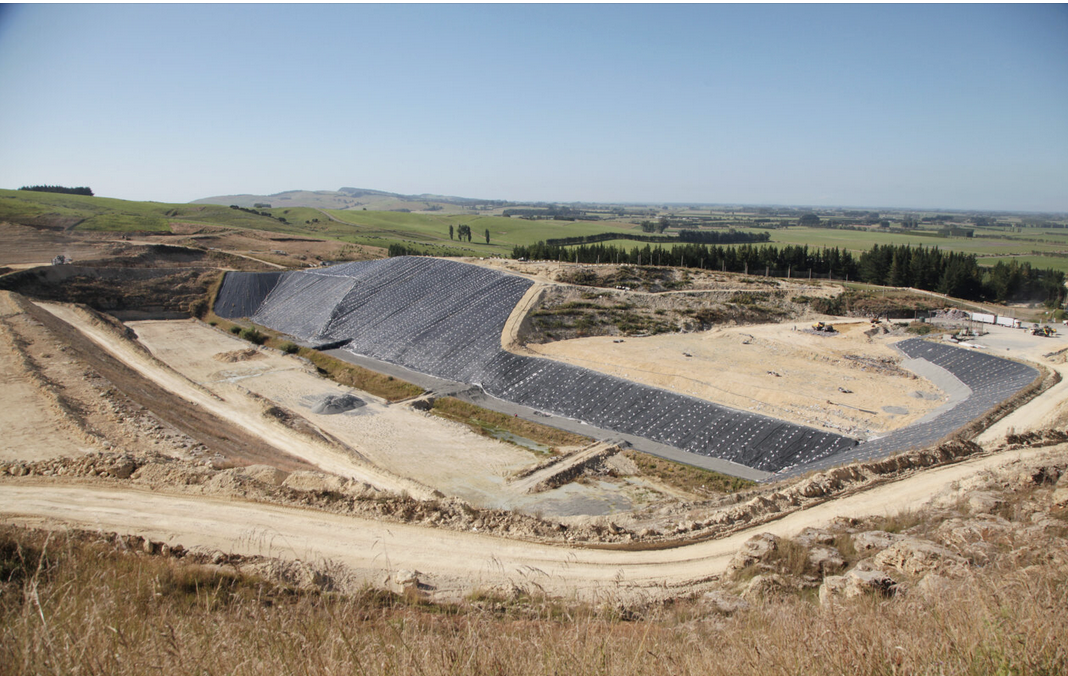
It would also allow us to see what the actual trucking costs are to a Limestone Quarry facility, and see if a better deal might be wrung out of AB Lime [second photo below] now that Taiko Landfill is also an option.
My message to debt-doing decision-makers is that fools rush in, and if the ORC try to push DCC landfill spending along immediately, that would be another good reason to push for a Unitary Council.


 Lee Vandervis - lee@vandervision.co.nz